Sumber ilustrasi: Pixabay
18 Maret 2026 13.05 WIB – Umum
_________________________________________________________________________________________________________________________________________________
Desanomia [18.03.2026] The destructive capacity of war, in its contemporary evolution, has surpassed the limits that societies and states were once able to repair. In earlier periods, even severe wartime devastation still allowed for reconstruction within a definable timeframe. Today, however, both the scale and the depth of destruction have undergone a fundamental transformation. War no longer targets only military assets; it penetrates the entire web of systems that sustain human life.
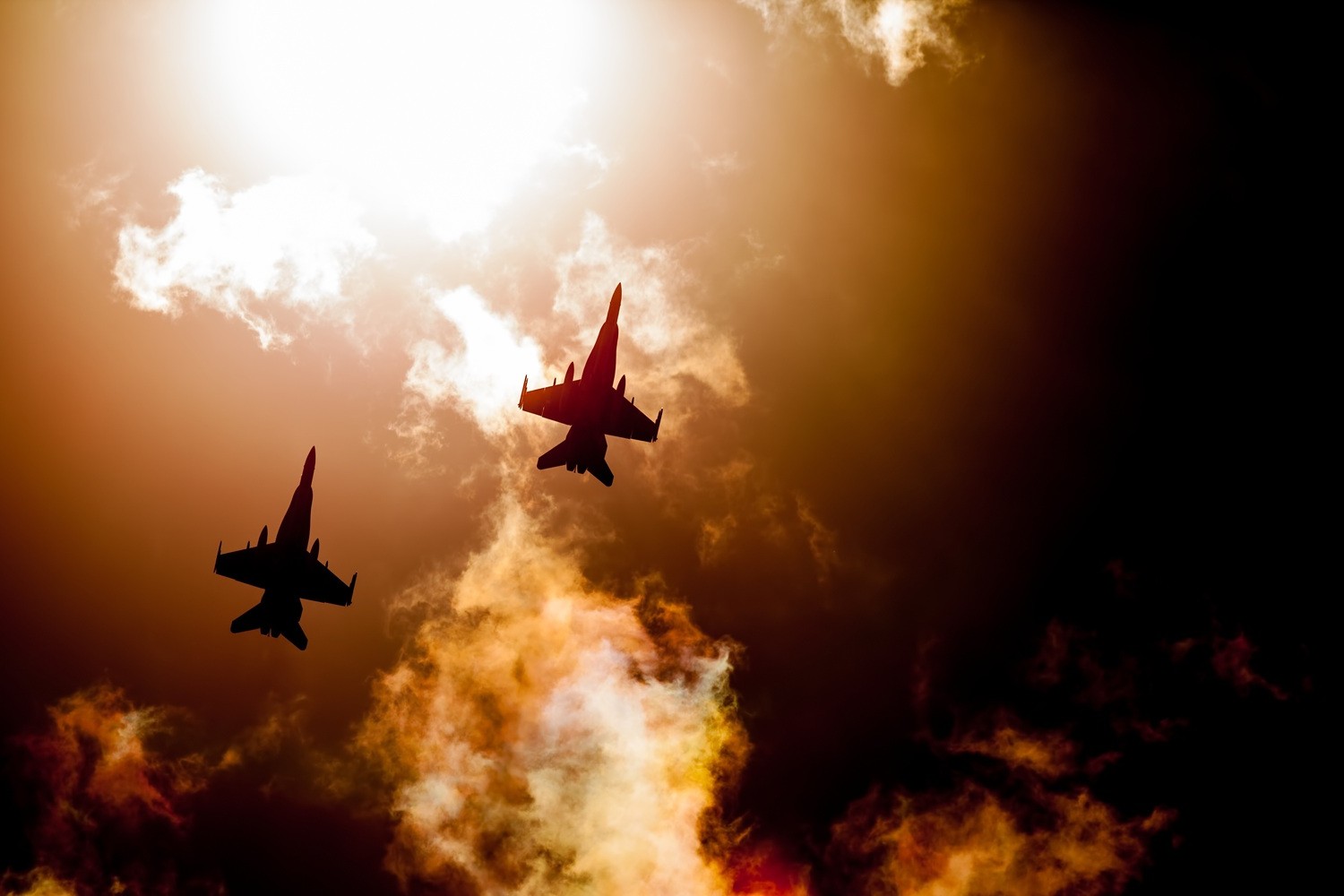
Advancements in military technology have been central to this shift. Modern weapons are designed with levels of precision, range, and destructive force far beyond those of previous generations. Yet this very precision has expanded, rather than narrowed, the scope of impact. Targets now extend beyond military installations to include the critical infrastructure that underpins everyday life.
Core systems like clean water, electricity, healthcare, communications, and transportation, have become acutely vulnerable in contemporary conflicts. When these systems fail, the burden is carried not only by military forces but by entire civilian populations. Daily life comes to a standstill, basic services collapse, and communities lose the means to sustain themselves.
Damage to such infrastructure is rarely reversible in the short term. Rebuilding power grids or water systems often takes years, even in the absence of conflict. When wars persist, recovery efforts are repeatedly postponed, causing destruction to compound without ever being fully resolved.
At the same time, war has begun to penetrate the ecological foundations of life. The use of weapons, the destruction of energy infrastructure, and the wider environmental impact of conflict leave behind contamination that persists long after the fighting ends. Soil loses its fertility, water becomes unsafe, and ecosystems are pushed beyond their capacity to recover. In certain cases, the damage is not merely long-term but irreversible, permanently reshaping environmental conditions.
Another increasingly decisive dimension is cyber and technological warfare. Attacks on digital systems can paralyze public services, financial systems, and communication networks without physical destruction. Yet the consequences are equally severe, as they disrupt the foundational functions of modern societies that rely heavily on information and data systems.
The accumulation of these forms of damage creates a condition in which the capacity for recovery no longer matches the scale of destruction. Affected states lose not only infrastructure but also human capital, social stability, and public trust. Reconstruction ceases to be merely a technical challenge and becomes a prolonged structural crisis.
Under such conditions, generations living within conflict zones do not simply endure temporary suffering; they lose the possibility of a full and dignified life. Access to education, healthcare, and employment is disrupted over the long term. The effects of war are thus transmitted across generations, creating cycles of vulnerability that are exceedingly difficult to break.
When destruction exceeds the limits of recovery, war can no longer be understood as an instrument for achieving political ends. The costs far outweigh any conceivable gains. Even when conflicts formally end, the conditions left behind often preclude the emergence of sustainable stability.
In this sense, modern war has undergone a qualitative transformation. What was once, however problematically, still manageable within certain bounds has become a force capable of undermining the very foundations of human life. At this point, war is no longer merely a conflict between powers; it is an existential risk that threatens the continuity of our shared human future.
Compiled from various sources. (njd)
Note: This article was made as part of a dedicated effort to bring current world state closer to everyday life and to inspire curiosity in its readers.