Sumber ilustrasi: Magnific
12 Mei 2026 09.56 WIB – Akar
_________________________________________________________________________________________________________________________________________________
Desanomia [12.05.2026] Do you like eating chicken? Do you raise chickens yourself, or are you part of the chicken-based food industry cycle whose outlets can now be found almost everywhere? Should chickens become an object of reflection for us? What should we understand from the existence of chickens within the context of the food industry? If we take chickens as a subject of reflection, what would your response be? The following is a simple reflection on chickens which perhaps can be expanded further:
In modern civilisation, chickens may no longer be merely farm animals. Chickens have become a “structure”. Their presence exists not only in farms or markets, but within economic systems, consumption patterns, industrial logic, and even within the way human beings understand life and necessity itself.
When humanity consumes more than two hundred million chickens every single day, the matter is no longer purely biological or economic. Such a number carries a very deep meaning. Modern human life is in fact sustained through the industrialisation of another living creature on a scale that is almost unimaginable.
On one side, chickens provide an extraordinary service to humanity. Chicken meat and eggs make protein available at relatively affordable prices. In many societies, especially in developing countries, chickens become nutritional support for ordinary people. Children can grow more healthily. Families with limited income can still access protein. In a certain sense, chickens help sustain modern life itself.
Yet precisely because chickens play such a major role, difficult ethical questions emerge: what happens when living creatures are transformed into systems of mass production?
In traditional societies, the relationship between humans and animals still carried a certain closeness. Farmers recognised their livestock individually. Slaughter carried ritual, emotional, and even spiritual dimensions. In modern industry, however, this relationship has changed. Chickens no longer appear primarily as individual living creatures, but as units of protein production.
Here we can clearly see the logic of modernity at work. Life begins to be measured through efficiency, speed, productivity, and supply capacity. Chickens are chosen not simply because they are “liked”, but because industrially they are highly efficient: they grow quickly, cost less to produce, are easy to process, and can be raised in very large numbers. Biological life itself eventually enters the logic of optimisation.
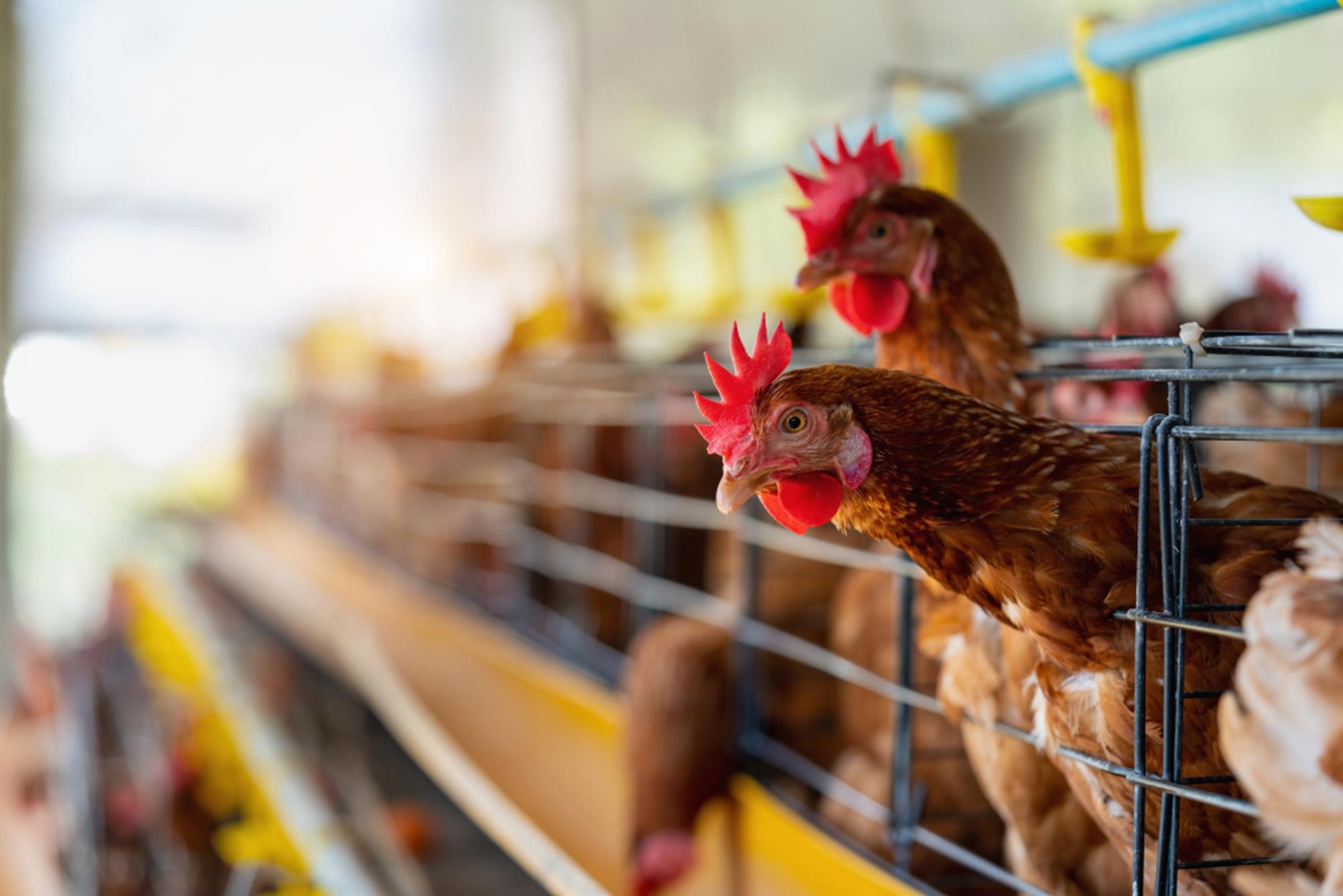
The modern chicken becomes an important symbol of industrial civilisation. The chicken’s body has been shaped through genetics, feeding systems, artificial lighting, and growth management in order to fit market demands. In a certain sense, not only human beings are shaped by modern industry. Animal bodies themselves are also shaped by human economic logic.
Here an interesting paradox appears. The more successful the system becomes in providing cheap and abundant chicken, the further human beings move away from awareness of the chicken’s own life. Meat arrives in clean cuts at supermarkets. Eggs appear neatly arranged on store shelves. Consumers enjoy the final product without seeing the entire chain of life, labour, and everything that makes such abundance possible.
Modernity creates moral distance. Human beings consume on a massive scale, yet no longer experience existential closeness with what is being consumed. Biological life becomes an anonymous commodity. Chickens are no longer understood as specific living beings, but simply as “chicken products”.
Yet criticism towards the chicken industry also cannot be made too simplistically. There is a profound dilemma within it. If chicken production were drastically reduced, protein prices could rise sharply, and poorer communities would suffer the greatest impact. In other words, the modern chicken industry is simultaneously a form of exploitation and a form of rescue. Exploitation of animal life, yet also nutritional support for billions of people.
Therefore, the issue is not merely “to eat chicken or not to eat chicken”. The issue is deeper: how should human beings understand their relationship with other forms of life within modern industrial systems? Should efficiency become the only measure? Does human necessity automatically justify every form of biological industrialisation? Or should humanity search for a more ethical relationship between food needs and respect for life?
Chickens also reveal something about human beings themselves. Modern humans live within a paradox of consumption: wanting food that is cheap, fast, abundant, and always available, while often refusing to see the structural consequences that make such conditions possible. In this sense, chickens become a mirror of modern civilisation itself: highly productive, highly efficient, yet increasingly distant from direct experience with life.
Perhaps for that reason, chickens deserve to be viewed not merely as objects of consumption, but as philosophical symbols of the modern age. A chicken today is not simply an animal. A chicken is a meeting point between global economics, biological technology, nutritional necessity, ethics of life, and humanity’s desire to control nature for its own survival.
What do you think? (njd)
Note: This article was made as part of a dedicated effort to bring everyday life around us to our minds.