Sumber ilustrasi: Wikimedia Commons
24 Mei 2026 14.15 WIB – Akar
_________________________________________________________________________________________________________________________________________________
Desanomia [24.05.2026] Sego berkat is more than just a parcel of rice taken home after attending a communal feast. Within Javanese tradition, sego berkat represents care, prayer, and gratitude shared through food. From the hands of the host to the hands of the guest, the meal becomes a simple yet meaningful social bond.
The term sego berkat comes from the Javanese language: sego means rice, while berkat means blessing. The name itself suggests that food is understood not only as a physical necessity, but also as a spiritual and social medium. To offer food is, in a sense, to share goodwill with others.
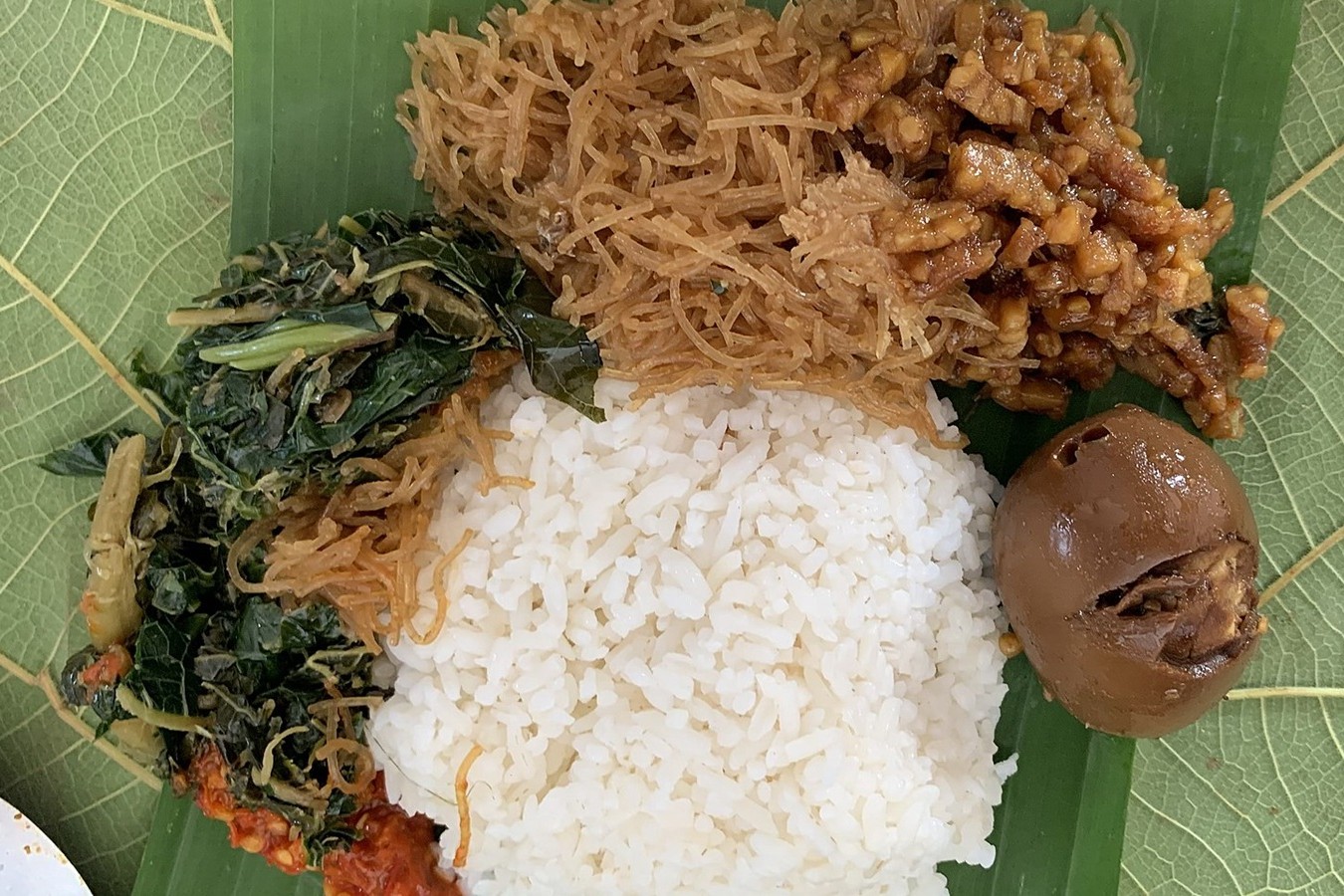
The most distinctive feature of traditional sego berkat lies in its wrapping. In many rural areas of Java, particularly regions such as Wonogiri, the rice is wrapped in teak leaves or banana leaves. The warmth of the rice releases a distinctive aroma from the leaves, creating a fragrance impossible to reproduce with plastic or paper packaging.
The use of leaves is not just a technical matter, but part of a cultural experience. Teak leaves create an impression of warmth and familiarity, as though the food still maintains a direct relationship with the land and environment from which the community lives. There is a simplicity that, paradoxically, produces authenticity.
The contents of sego berkat are generally modest, yet carefully balanced in flavour. White rice forms the centrepiece, accompanied by stir-fried tempeh or tofu, sweet soy noodles, serundeng, and shredded chicken. In larger celebrations, pieces of beef or mutton may also be included as a gesture of respect towards the guests.
Interestingly, this composition reflects the philosophy of balance often found in Javanese cuisine. Savoury, sweet, and spicy flavours coexist without overwhelming one another. Simplicity becomes the meal’s greatest strength, because the food is intended to be shared and enjoyed collectively.
Within traditions such as kenduri or communal gatherings, sego berkat also serves a powerful social function. The food brought home allows family members who did not attend the event to partake in its “blessing”. In this way, social connection extends beyond the ceremony itself and continues within the household.
This tradition reveals the enduring spirit of mutual cooperation within Javanese society. Sego berkat is not an extravagant gift, but a concrete expression of care. Through a humble parcel of rice, communities learn that togetherness is often built through small acts shared sincerely.
Yet as time changes, the function of sego berkat has gradually shifted. In the past, it felt special because it appeared only during particular occasions such as weddings, thanksgiving feasts, or communal gatherings. Today, many eateries in large cities sell “nasi berkat” as an everyday menu item, using teak-leaf packaging to evoke nostalgia and a sense of tradition.
Despite this commodification, sego berkat continues to hold a strong emotional appeal. People do not purchase it merely to satisfy hunger, but also to revisit memories of home, the scent of warm leaves, and moments of togetherness. In its modest form, sego berkat reminds us that food often carries far more stories than flavour alone.
What do you think? (njd)
Note: This article was made as part of a dedicated effort to bring everyday life around us to our minds.