Sumber ilustrasi: Magnific
06 Juni 2026 21.57 WIB – Akar
_________________________________________________________________________________________________________________________________________________
Desanomia [06.06.2026] What happens when education becomes more concerned with training children to answer than guiding them to ask? Can such a question be dismissed as a foolish one? Or does it contain a deeper concern about the direction of our education? From an early age, children are taught how to find the correct answer, yet they are rarely encouraged to understand why a question should be asked in the first place. They are considered successful when they can answer a problem, not when they can recognise the problem itself. Yet before there is an answer, there is always a question. Before there is knowledge, there is curiosity. Before there is creation, there is the ability to imagine something that does not yet exist.
Here lies a deeper challenge within education. An education system that focuses excessively on answers risks producing people who are skilled at repeating but weak at discovering. Children may grow into capable memorisers without necessarily becoming independent thinkers. They may know what has already been explained, yet remain unable to imagine what has not yet been explained. They may master information, but still lack the courage to ask: Is this the only possibility? Can the world be organised differently? Can our common life be imagined in a way that is more just, more humane, and more meaningful?
Questions of this kind often feel disruptive. They knock on the doors of the mind, refuse to remain silent, and are not satisfied with quick answers. Yet precisely therein lies their value. A living question does not just seek an answer; it opens the possibility for further questions. It sets thought in motion. It compels people to take distance from habit, from systems that are regarded as normal, and from knowledge that has become fixed and unquestioned. In the effort to strengthen a nation’s intellectual capacity, the ability to ask questions is not a minor matter. It is a sign that the mind has not completely surrendered itself to routine.
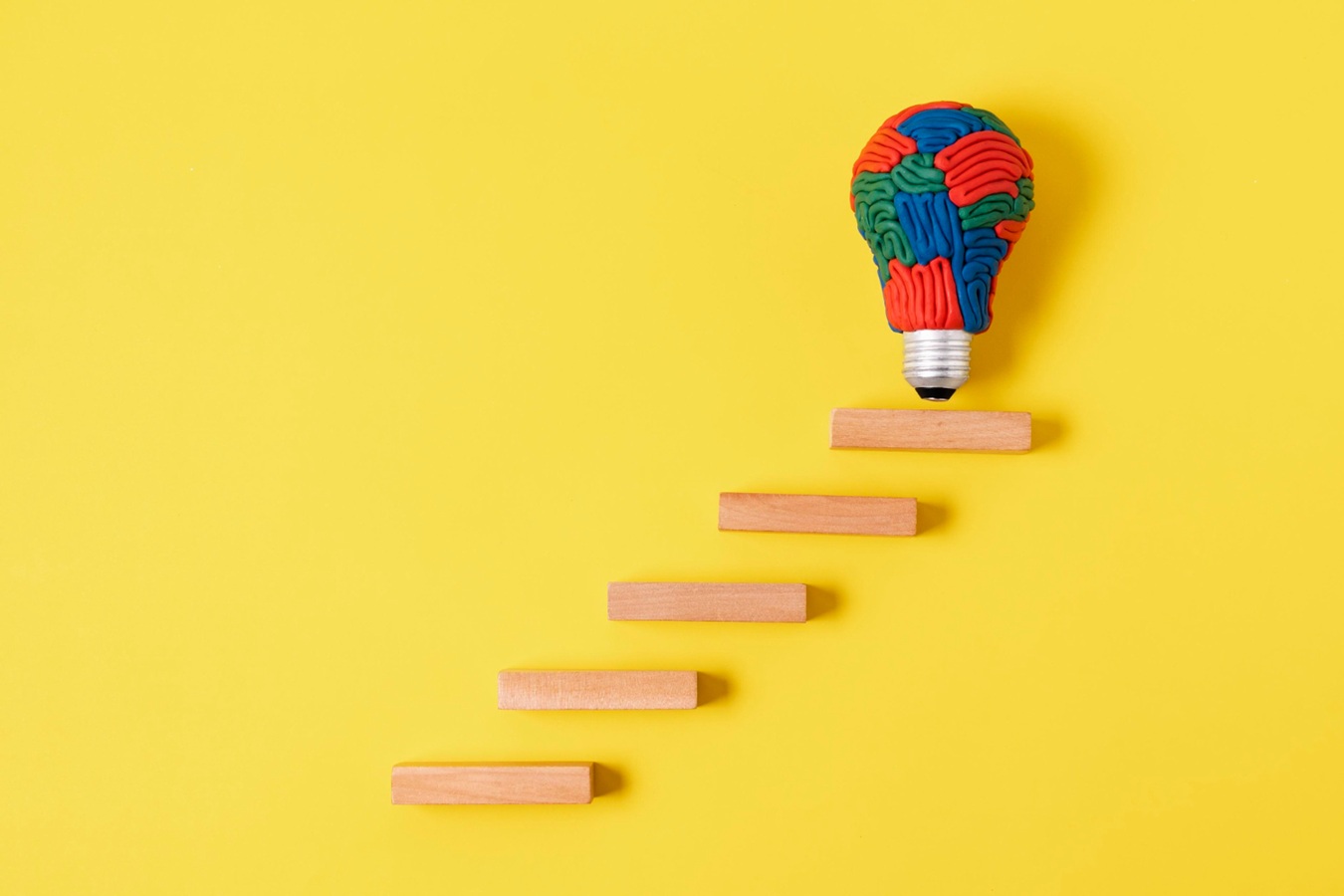
For this reason, imagination must once again be recognised as an essential part of education. Imagination is not only the ability to fantasise. It is the capacity to perceive possibilities beyond existing realities. It allows people to ask not only “What is?” but also “What might be?” No technology has ever emerged without first being imagined. No institution has ever been established without first being conceived. No social transformation has ever occurred without first arising as an image of a reality different from the present one. Before becoming reality, many of the greatest achievements in human history first existed as possibilities within imagination.
Therefore, the future quality of a nation is determined not only by the amount of knowledge possessed by its younger generation, but also by the breadth of possibilities they are capable of imagining. A nation that passes on knowledge alone will produce generations who are skilled at managing what already exists. A nation that also nurtures imagination, however, will produce generations capable of creating what does not yet exist. The former preserves continuity. The latter opens the future.
Imaginative capacity also enables a society to imagine itself. Every nation lives through certain images of who it is, where it is heading, what values it seeks to realise, and what kind of common life it considers desirable. When imagination weakens, a nation becomes trapped in routine and merely reacts to circumstances. When imagination is strong, however, a nation possesses an orientation that goes beyond immediate concerns. It not only manages the present but also prepares possibilities for the future.
This is why the younger generation occupies such a crucial position. Throughout history, nearly every major transformation has been initiated by those who have not fully accepted the world as it is. Young people often perceive gaps that older generations no longer see. They question what has long been taken for granted. They imagine new directions when many believe the old path is sufficient. This capacity does not arise simply because they know more, but because they still possess the courage to see alternative possibilities.
Yet imagination does not develop automatically. It requires an educational environment that not only tests answers but also cultivates questions. It requires a culture that values not only obedience but also exploration. It requires a social environment that does not only demand the reproduction of knowledge but encourages the creation of knowledge. If education evaluates children solely on their ability to answer predetermined questions, then what develops most strongly is reproductive ability. Imagination, by contrast, flourishes when children are given space to question, interpret, imagine, and construct new possibilities.
This challenge becomes even greater in the digital age. Children and young people today live amidst an abundance of information, images, sounds, and instant explanations. On one hand, such access expands knowledge. On the other hand, it can make the mind more accustomed to receiving than creating. When almost everything is readily available in visual and immediate form, the inner space required for imagination may gradually shrink. For this reason, the central challenge of education today is no longer just the provision of information, but the preservation of humanity’s ability to go beyond the information that is available.
Imagination is closely connected to freedom. A person who cannot imagine alternatives will easily regard existing conditions as the only possible reality. Conversely, a person with imaginative capacity understands that today’s reality is only one possibility among many others. In personal life, imagination gives rise to creativity. In social life, it gives rise to renewal. In national life, it becomes a necessary condition for rethinking and reorganising collective directions when existing arrangements are no longer adequate.
One of the most important responsibilities of education is not only to teach what is already known, but also to preserve the ability to imagine what is not yet known. The future of a nation is not built through memorisation alone. It is built by generations who are able to question, imagine, create, and work to transform possibilities into reality. A nation that loses its imagination may still possess schools, curricula, technology, and educational institutions of impressive sophistication. Yet gradually it loses the deepest source of its own renewal. Conversely, a nation that nurtures the imagination of its younger generation is, in fact, nurturing one of the most fundamental foundations of its future.
What do you think? (njd)
Note: This article was made as part of a dedicated effort to bring everyday life around us to our minds.