Sumber ilustrasi: Wikimedia Commons
24 Mei 2026 09.03 WIB – Akar
_________________________________________________________________________________________________________________________________________________
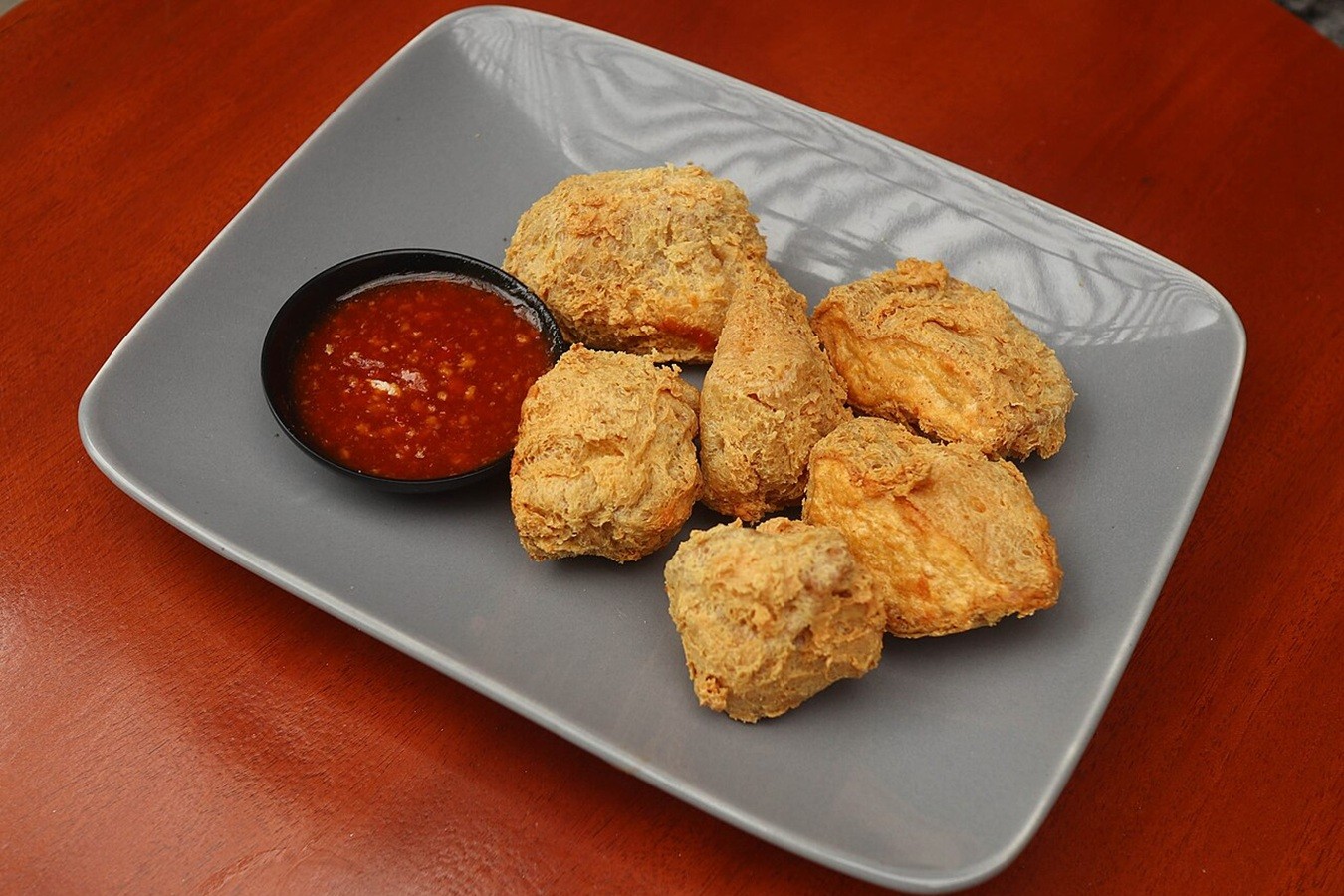
Desanomia [24.05.2026] Tahu walik is more than just a snack from Banyuwangi. It is a small lesson in transformation. By turning the inside of hollow fried tofu outward, this humble food demonstrates that something may feel entirely new without abandoning its origins.
At its most fundamental level, tahu walik remains tofu. Yet a change in form gives rise to a different experience. The inner surface, once concealed, becomes the crisp exterior. From this, one may see that identity is shaped not only by material, but also by arrangement, orientation, and presence.
Tahu walik invites reflection upon the relationship between substance and appearance. In social life, things are often judged first by their surface. Yet in tahu walik, the surface is not a mere ornament. The exterior itself emerges from what was once hidden within and is finally given space to appear.
Here, the act of turning inside out becomes an intriguing metaphor. Novelty does not always arise from creating something entirely unprecedented. At times, novelty emerges from the courage to alter one’s perspective towards something long familiar.
This phenomenon resembles the modern world. Many products appear fresh through new designs, despite their core technology remaining largely unchanged. Tahu walik suggests that repackaging may generate new meaning, provided the transformation offers a genuinely different experience.
Yet tahu walik also reminds us that presentation must not become an empty deception. The crisp exterior may capture attention, but the savoury filling sustains the experience. Without genuine flavour, an attractive form becomes only a fleeting impression.
For this reason, tahu walik is not a celebration of appearance alone. Rather, it reveals that form and substance depend upon one another. Form opens the door to attention, while substance gives one a reason to return.
From a cultural perspective, tahu walik reflects the ingenuity of ordinary people in transforming limitation into possibility. Simple hollow tofu may become a beloved delicacy through creative intervention. Value is not permanently attached to an object, but may grow through the ways human beings shape and reinterpret it.
The process of turning the tofu inside out also carries a meaning of patience and craftsmanship. Human hands intervene to transform something ordinary into a culinary experience. In this sense, food becomes a trace of creativity rather than just the product of a kitchen.
More broadly, tahu walik teaches that reality itself may change when one changes the way of seeing it. Something once considered ordinary may become compelling again when viewed from another angle. In this sense, tahu walik offers a quiet wisdom about possibility.
Ultimately, tahu walik becomes a symbol of balance between appearance and substance. Beauty emerges not because the surface defeats the essence, but because both work together. From a single piece of inverted tofu, one learns that renewal often arises from the courage to rearrange what has long been familiar.
What do you think? (njd)
Note: This article was made as part of a dedicated effort to bring everyday life around us to our minds.